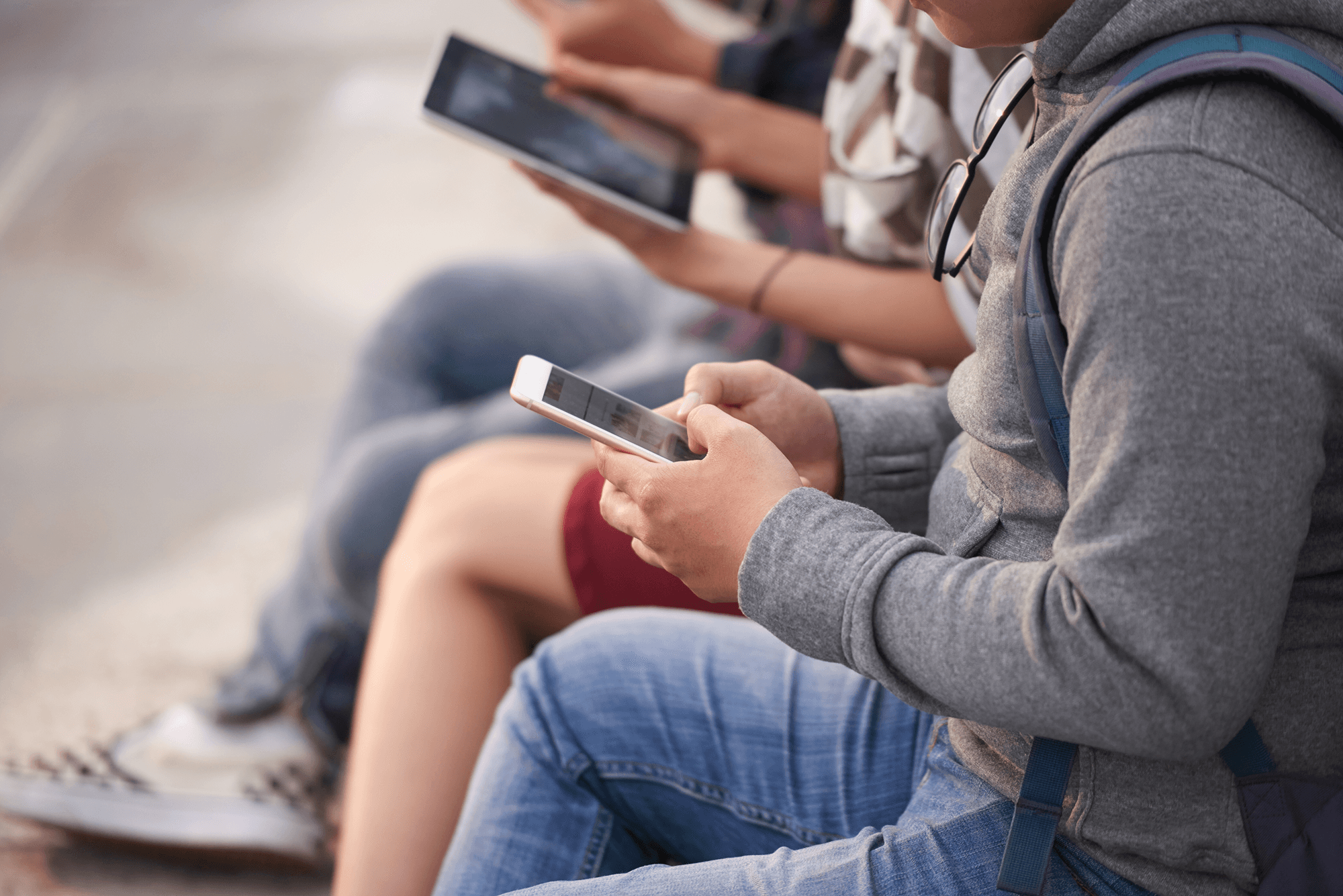
Australia’s decision to ban under-16s from social media has sparked a global debate - and it didn’t take long for it to reach our office too. With a team spanning ages 18 to 47, and everyone growing up at very different stages of the internet’s evolution, opinions were (unsurprisingly) all over the place.
So we sat down for an open chat. Is this the right way to keep young people safe online, or a fairly blunt fix for a much more nuanced problem?
Bringing together parents, non-parents, and people whose online experiences look nothing alike, we talked it through as a team. One thing became clear very quickly: there’s no single right answer.

For those of us with kids, the pull of screens is impossible to ignore. Many of us grew up outside, or at least without a phone permanently in our hands. Watching children drift into short-form content, endless scrolling, and algorithm-driven feeds feels very different to sitting in front of the TV after school.
The risks aren’t abstract either. Bullying, grooming, misinformation, and exposure to inappropriate content came up again and again. These concerns are backed up by growing public anxiety, even if the research itself is still mixed on whether social media directly causes poor mental health outcomes.
At the same time, several people shared a different side of the story. Online spaces can be a refuge. For those who felt isolated or bullied at school, social media and online communities provided connection, identity, and escape. A blanket ban risks removing that lifeline for some children while protecting others.
What felt very different to many of us wasn’t just that kids are online - but how. Today’s platforms are built around engagement at all costs. Infinite scroll, hyper-personalised feeds, and algorithmic recommendations mean children can be exposed to huge volumes of information very quickly, not all of it healthy or age-appropriate.
There were worries about shortened attention spans, less time outdoors, and less space for boredom or creativity. Add to that the risks of grooming, extreme content, and relentless comparison, and it’s easy to see why parents feel overwhelmed.
Research suggests that simply measuring “screen time” misses the point. How children use platforms, and what they’re shown, matters far more than raw hours spent online.
Another issue we talked about was comparison. Social media amplifies pressure around appearance, lifestyle, and success, often in subtle ways. A ban could reduce that constant comparison during formative years, which feels like a positive for many families.
But it also creates uneven experiences. Some parents already allow social media, others don’t. A national ban levels the playing field and takes some of the pressure off parents being “the bad guy”. On the flip side, it may push social media use underground, making it harder for parents to know what’s really going on.
One of the biggest red flags for our team was age verification. Requiring people to upload ID to private companies or government systems raises privacy concerns. Data breaches aren't uncommon, and trust in platforms is already low.
There was also a fair bit of scepticism about how effective this will really be. Adults already use VPNs to get around age gates. Teenagers, who are digital natives, will absolutely find ways to do the same.
Which raises an interesting question: will the ban mainly affect kids who already follow the rules, while the more vulnerable ones slip through the cracks?
One hopeful angle we discussed was long-term impact. For children who grow up entirely without mainstream social media, could this be genuinely beneficial? Less algorithmic noise. More time for offline friendships, hobbies, and nature. A slower introduction to online life.
But that only works if what comes next is done well. If social media access suddenly switches on at 16 with no preparation, we may just be delaying the problem rather than solving it.
Where there was the strongest agreement was education. Teaching children how to use social media safely feels just as important as restricting access. That includes:
Many of us learned practical skills online - from coding and design to DIY and creative hobbies. Cutting off access entirely risks removing valuable learning opportunities, especially if education systems don’t fill the gap.
Parents matter here too. Supporting parents to understand the platforms, model healthy behaviour, and have open conversations with their kids is crucial. Surveillance and blanket bans alone don’t build trust, dialogue does.
Maybe. The ban may give families breathing room, reduce pressure on parents, and protect some children from very real harms. But it also feels like a last resort, not a perfect solution.
Research suggests prohibition alone rarely works. Just as with alcohol education, a harm-minimisation approach, combining regulation, education, parental support, and platform accountability, is more likely to make a lasting difference.
The bigger question might be this: if platforms had taken responsibility earlier, would governments need to step in at all?
What’s certain is that this conversation isn’t going away. Whether Australia’s approach becomes a model or a cautionary tale, the long-term impact, in five, ten, even twenty years, will be fascinating to watch.
And as a team that builds technology for a living, one thing we all agree on is this: how we design digital spaces really matters.