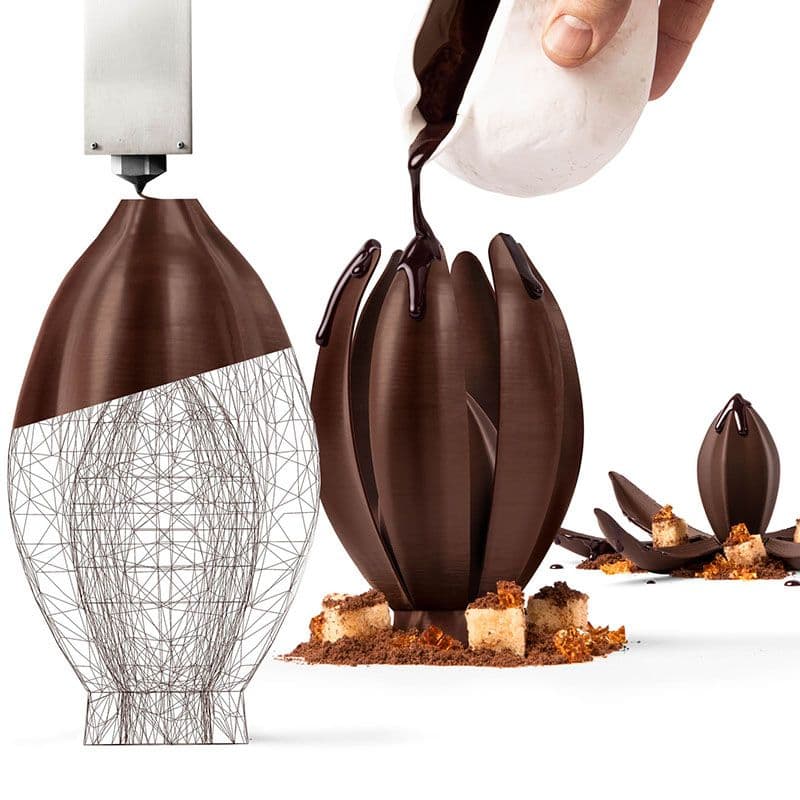
What if you could design your own Easter egg from scratch, choose the shape, the flavour, and the filling, and have it printed out in minutes? That is no longer a hypothetical. 3D chocolate printing has arrived, and it is changing how we think about food, personalisation, and manufacturing.
3D food printing has been in development for years, but 2026 has seen it take a serious step forward. At CES 2026 in January, several companies showcased machines capable of printing intricate chocolate designs on demand. One standout was ChocoPrint, a consumer-friendly device that lets users upload or design a shape, select their chocolate type, and watch as the machine builds it layer by layer.
The process works much like a standard 3D printer, but instead of plastic filament, it uses tempered chocolate that is extruded through a heated nozzle. The result is a solid, detailed chocolate piece that can be as simple or complex as you want. Easter eggs, company logos, personalised gifts, custom cake toppers. The possibilities are genuinely broad.
It is easy to dismiss 3D-printed chocolate as a gimmick. But the underlying technology tells a bigger story about where manufacturing is heading. The ability to produce customised, on-demand products without retooling a factory line is a principle that applies far beyond confectionery.
In industries like healthcare, aerospace, and software development, the same shift is happening. Bespoke solutions are replacing one-size-fits-all. Whether it is a personalised medical implant, a custom engineering component, or a tailored software system built for a specific business need, the trend is clear: the future is made to measure.
Getting chocolate to print reliably is harder than it sounds. Chocolate is sensitive to temperature. If it is too hot, it will not hold its shape. Too cold and it will not flow through the nozzle. The machines have to maintain precise temperature control throughout the entire print, and the chocolate itself needs to be properly tempered to get the right snap and finish.
Early 3D chocolate printers were slow, expensive, and limited to simple shapes. The latest generation is faster, more precise, and capable of printing hollow structures, meaning you can actually create a proper Easter egg with a shell and a filling. Some models even support multiple chocolate types in a single print, so you can combine dark, milk, and white chocolate in one design.
For businesses, the appeal is obvious. Imagine offering customers fully personalised products without the cost and lead time of traditional manufacturing. Retailers are already experimenting with in-store chocolate printing, and corporate gifting companies are offering branded chocolate designs for events and marketing campaigns. The technology is also being explored in hospitality, with hotels and restaurants creating bespoke desserts for guests.
At MCD Systems, we help businesses adopt new technologies and integrate them into their operations. Whether you are exploring IoT and automation, building a custom e-commerce platform, or looking at how emerging tech can give you a competitive edge, we can help you work out what is worth investing in and what is just noise.
3D-printed Easter eggs might sound like a fun novelty today, but the principles behind them are shaping the future of how products are designed, made, and delivered. And that is something every business should be paying attention to.